

Happy Monday! ☀️
Welcome to the 227 new hungry minds who have joined us since last Monday!
If you aren't subscribed yet, join smart, curious, and hungry folks by subscribing here.

📚 Software Engineering Articles
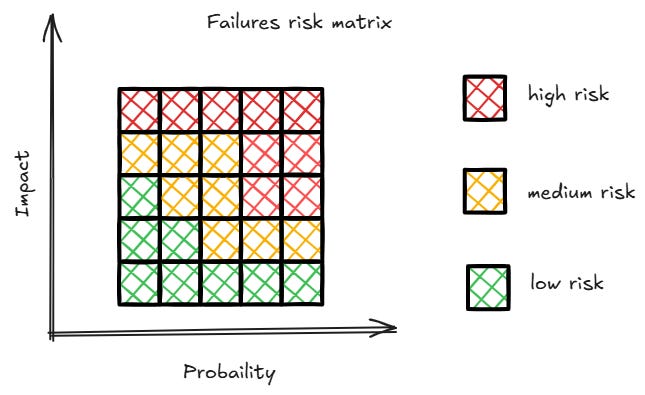
Why distributed systems fail and how to limit damage
Agentic engineering insights from Lenny's podcast conversation
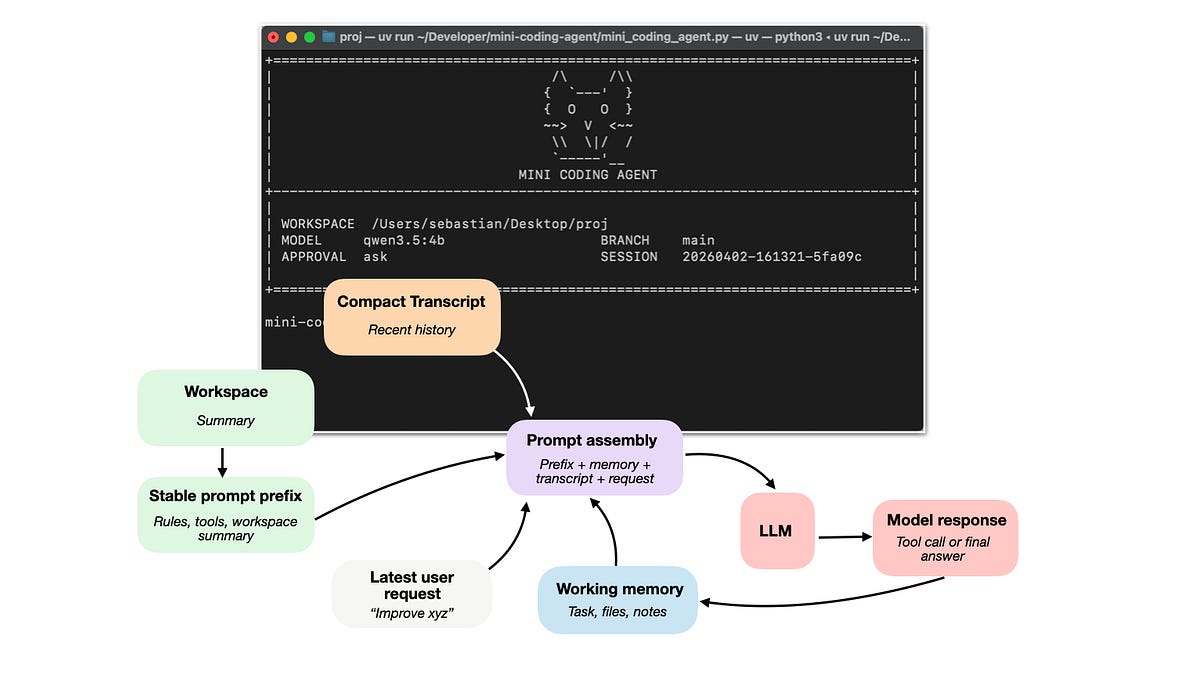
Claude Code's source leak reveals production agent design patterns
The seniority trap: avoiding stagnation after years
Database performance strategies and their hidden costs explained
🗞️ Tech and AI Trends
Oracle lays off workers amid AI investment surge
Google releases Gemma 4 open models for developers
OpenAI closes record funding round in Silicon Valley
👨🏻💻 Coding Tip
URLPattern API simplifies complex URL routing with named capture groups and regex alternation patterns
Time-to-digest: 5 minutes

Etsy's search used to rely heavily on engagement signals like clicks and purchases to rank results. The problem? Popular listings kept winning, even when they weren't the best match. So they built a Semantic Relevance Framework powered by LLMs to understand what buyers actually mean when they search.
The challenge: Measure and improve how well search results match user intent at scale, without replacing human judgment or slowing down real-time search.
Implementation highlights:
Human-anchored golden labels: Curate a dataset of query-listing pairs labeled as relevant, partially relevant, or irrelevant by trained annotators, with evolving guidelines that reflect cultural shifts (think "face masks" pre vs. post 2020)
LLM-as-a-judge with guardrails: Use o3 with few-shot chain-of-thought prompting and self-consistency sampling to generate millions of labels, but only after validating alignment with human judgments
Three-tier distillation pipeline: Cascade from the LLM annotator → a fine-tuned Qwen 3 VL 4B teacher → a lightweight BERT-based two-tower student model, each trading accuracy for speed
Sub-10ms real-time inference: The student model plugs directly into the search stack for filtering irrelevant results, enriching ranking features, and boosting highly relevant listings — all with <10ms added latency
Daily offline evaluation at scale: The teacher model scores millions of query-listing pairs daily via vLLM, powering relevance dashboards and A/B test guardrails at near-zero cost
Results and learnings:
Measurable relevance uplift: Fully relevant listings in search results jumped from 58% to 62% in just three months
Fairer visibility: Semantic relevance helps surface small and new sellers who lack engagement history but offer great matches
Engagement-relevance tension: Improving semantic relevance can decrease engagement metrics — a known pattern across e-commerce that requires adaptive, query-aware strategies
Etsy's playbook is a masterclass in scaling human judgment with LLMs without losing the human in the loop. The three-tier distillation approach is something any search team can steal: let the expensive model teach, and let the cheap model serve.





GITHUB REPO (tmux-squad-up)
jmux – tmux-based development environment for humans and coding agents
ARTICLE (bug-squash-party)
Building a Python Workflow That Catches Bugs Before Production
ESSENTIAL (startup-wisdom-drops)
A Student's Guide to Startups
ARTICLE (box-drawing-oopsies)
7 more common mistakes in architecture diagrams
ARTICLE (speed-versus-wallet)
Database Performance Strategies and Their Hidden Costs
ARTICLE (robots-fixing-robots)
How My Agents Self-Heal in Production
ARTICLE (javascript-never-stops)
What To Know in JavaScript (2026 Edition)
ARTICLE (ai-garbage-incoming)
Agentic slop PRs
Want to reach 200,000+ engineers?
Let’s work together! Whether it’s your product, service, or event, we’d love to help you connect with this awesome community.

Brief: Google DeepMind introduces Gemma 4, its most intelligent open-source AI models available in multiple sizes (E2B, E4B, 26B, and 31B), designed to maximize intelligence-per-parameter with support for agentic workflows, multimodal reasoning across audio and vision, and 140 languages, while running efficiently on personal computers, mobile devices, and edge hardware with industry-leading performance across benchmarks.
Brief: Cursor launches Cursor 3, a redesigned agent-first workspace that lets developers manage multiple agents across repositories, seamlessly handoff between local and cloud agents, and ship code faster with an integrated browser, simplified diffs view, and plugin marketplace—marking the shift toward autonomous software development.
Brief: Oracle begins cutting an estimated 20,000–30,000 employees, roughly 18% of its workforce, to free up $8–10B in annual cash flow and fund its aggressive $50B+ AI data center buildout, as the company faces investor pressure over rising debt and dwindling free cash flow despite a 95% jump in net income and $523B in contracted future revenue.
Brief: Silicon Valley fintech startup JustPaid built a team of seven fully autonomous AI agents using OpenClaw as the orchestration brain and Claude Code as the coding engine; shipping 10 major features in one month that would have taken human developers a year; at a cost of $10K–$15K/month, signaling the rise of agentic software development while raising cybersecurity and existential workforce concerns.
Brief: OpenAI raises $122B in committed capital at an $852B valuation; the largest private funding round in Silicon Valley history; anchored by Amazon ($50B), Nvidia ($30B), and SoftBank ($30B), with $3B from individual investors for the first time, as the company hits $2B/month in revenue, 900M weekly ChatGPT users, and positions for a potential IPO while narrowing its product focus toward enterprise and coding tools.

This week’s tip:
Use URLPattern to parse and validate complex URL schemes with capture groups and regex alternation. The constructor accepts a pattern object with pathname, search, and hash fields. Use .test(url) for validation and .exec(url) for extraction into named groups. Ideal for routing in service workers, micro-frontends, and dynamic imports where traditional pathname matching falls short. Works in modern browsers and Deno.

Wen?
Service worker routing with versioned APIs (v1, v2, etc.)
Micro-frontend module federation where path patterns dictate component loading
Parameter extraction in edge runtime URL rewriting without full URL parser overhead
Validation of callback URLs in OAuth flows with protocol/port constraints
Don't be pushed around by the fears in your mind. Be led by the dreams in your heart.
Roy T. Bennett


That’s it for today! ☀️
Enjoyed this issue? Send it to your friends here to sign up, or share it on Twitter!
If you want to submit a section to the newsletter or tell us what you think about today’s issue, reply to this email or DM me on Twitter! 🐦
Thanks for spending part of your Monday morning with Hungry Minds.
See you in a week — Alex.
Icons by Icons8.
*I may earn a commission if you get a subscription through the links marked with “aff.” (at no extra cost to you).