

Happy Monday! ☀️
Welcome to the 651 new hungry minds who have joined us since last Monday!
If you aren't subscribed yet, join smart, curious, and hungry folks by subscribing here.

📚 Software Engineering Articles
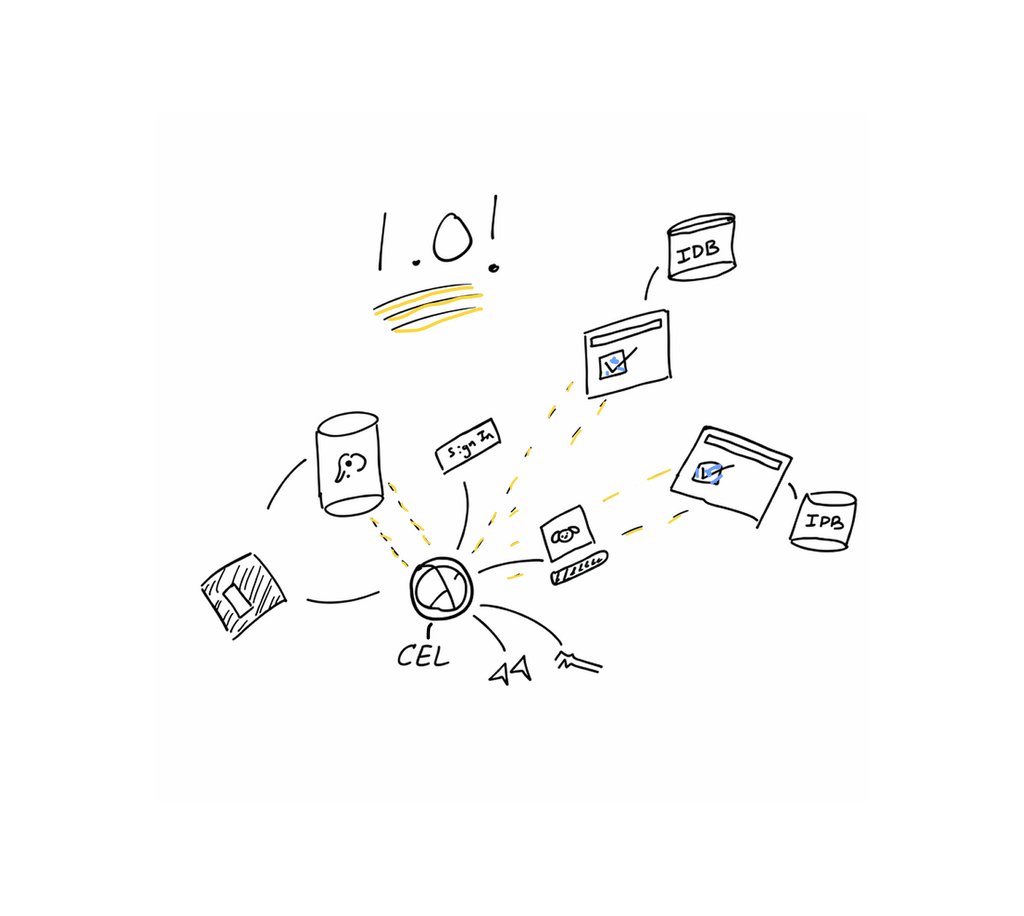
Backend for AI-coded apps reveals modern architecture patterns
Unwritten laws of software engineering every developer should know
Netflix's interval-aware caching scales Druid efficiently
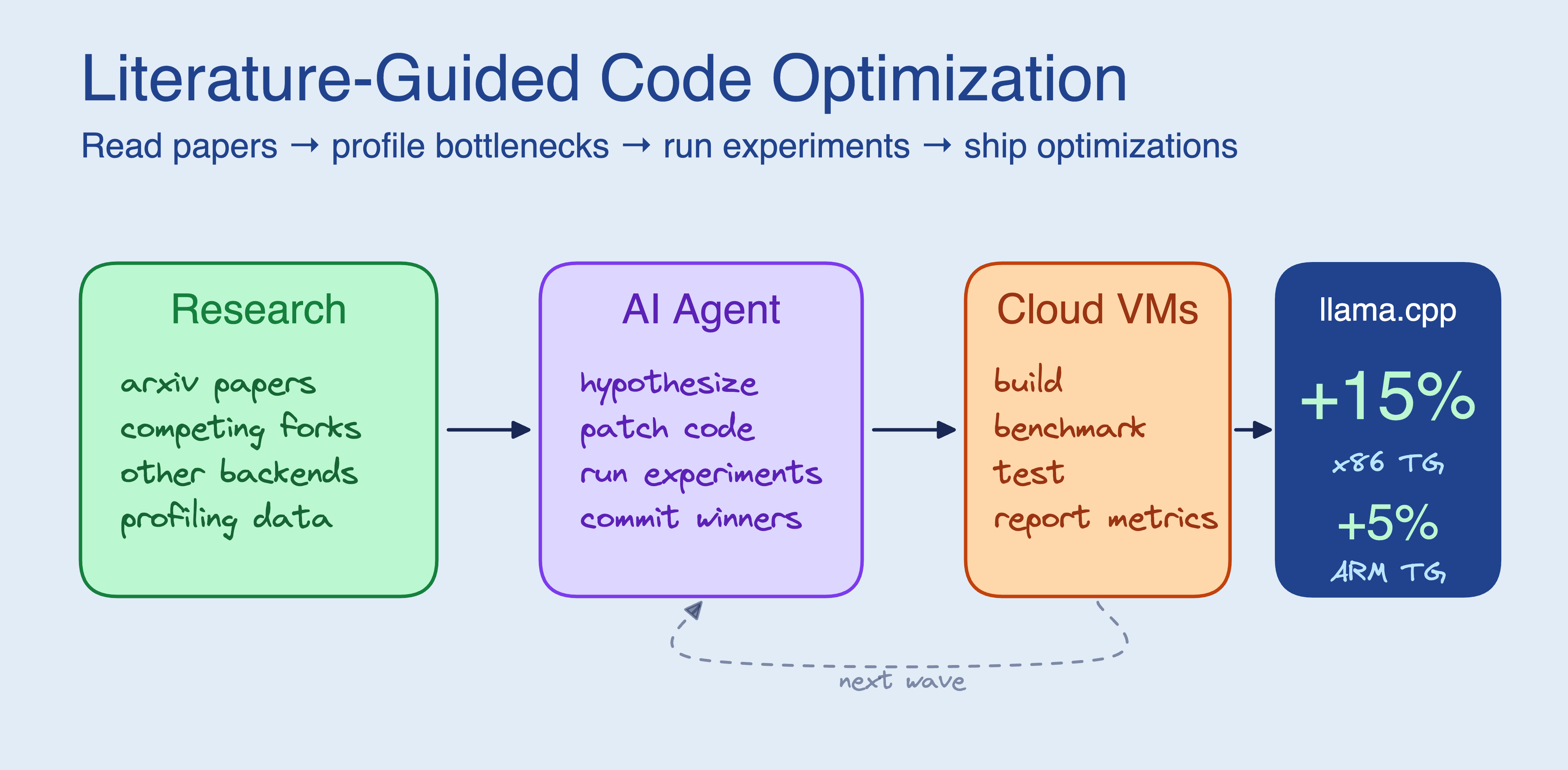
Research-driven agents code smarter by reading first
Game engines teach databases forgotten data patterns
🗞️ Tech and AI Trends
AI agent benchmarks broken by Berkeley researchers; what's next?
Anthropic's Project Glasswing secures AI software era
MIT's leaner AI models learn faster during training
👨🏻💻 Coding Tip
Navigation API and URLPattern decouple routing from history, enabling fine-grained back-button control
Time-to-digest: 5 minutes

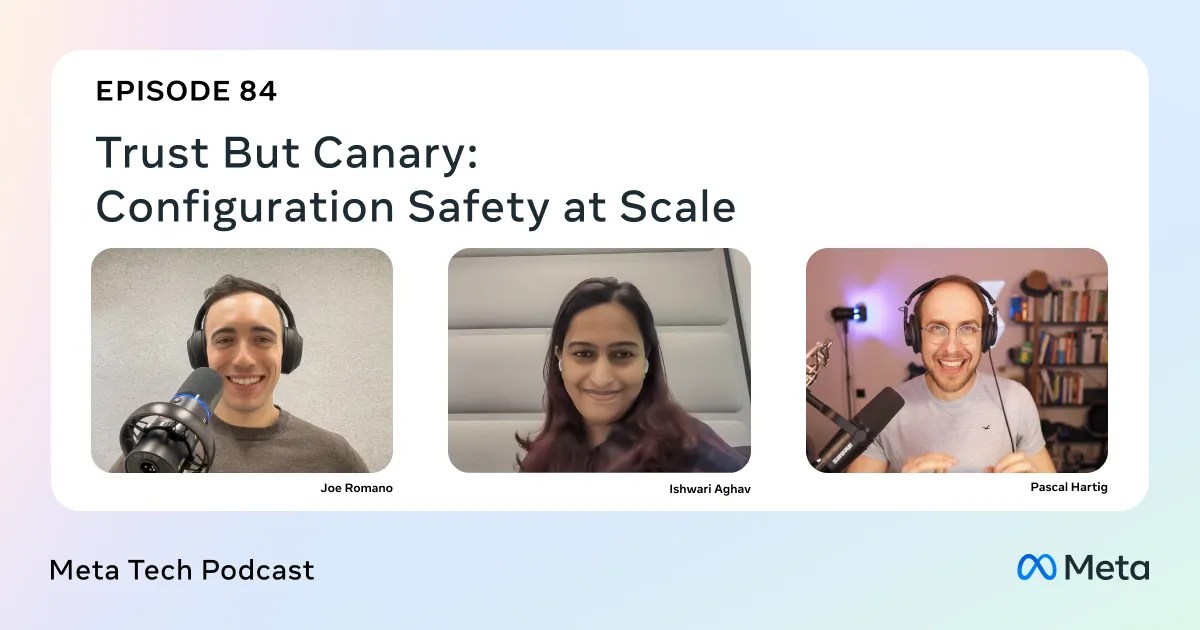
Meta faced a sprawling data pipeline: 4,100+ files across three languages and four repositories. When they pointed AI agents at it, the agents got lost fast—missing naming conventions, breaking serialization compatibility, and producing code that compiled but was subtly wrong. The real problem? All the knowledge lived in engineers' heads.
The challenge: Give AI agents a map of undocumented tribal knowledge without overwhelming their context windows or creating stale documentation that causes more harm than help.
Implementation highlights:
Swarm of specialized agents: Deployed 50+ AI agents in orchestrated phases—explorers, analysts, writers, critics, and fixers—each answering specific questions about the codebase
The five-question framework: Every module analyst extracted what it configures, common patterns, non-obvious gotchas (like hidden field renames), dependencies, and undocumented conventions
Compass, not encyclopedia: Generated 59 concise context files (~1,000 tokens each) with quick commands, key files, non-obvious patterns, and cross-references—zero fluff
Multi-round quality gates: Three independent critic passes improved scores from 3.65 to 4.20/5.0, eliminated hallucinations, and verified every file reference
Self-healing automation: Periodic jobs validate paths, detect gaps, re-run critics, and auto-fix stale context—because documentation debt compounds faster than interest
Results and learnings:
Coverage exploded: AI navigation jumped from 5% to 100% of modules (50 to 4,100+ files) while documenting 50+ non-obvious patterns that never existed on paper
Efficiency gains: Agents used 40% fewer tool calls per task; research that took two days now completes in 30 minutes
Model-agnostic: The knowledge layer works across leading models because it's structured data, not proprietary integration
Meta proved that tribal knowledge isn't a feature bug—it's a context opportunity. By turning undocumented expertise into machine-readable navigation, they didn't just help AI agents; they created a system that improves with every task it solves.
The best part? Your codebase probably has the same gaps. Start with the five questions, keep context tight, and let your critics do the gatekeeping. Your future self (and your AI agents) will thank you.


ARTICLE (game brain go brrr)
Introduction to Reinforcement Learning Agents with the Unity Game Engine
ARTICLE (supercomputer but make it chill)
Monarch: an API to your supercomputer
ESSENTIAL (chaos management 101)
Why Distributed Systems Fail and How to Limit the Damage
ARTICLE (robot butler energy)
Deep Agents Deploy: an open alternative to Claude Managed Agents
ARTICLE (databases are speed runners)
What Game Engines Know About Data That Databases Forgot
ESSENTIAL (robot thinks it thinks)
What Is the AI Agent Loop? The Core Architecture Behind Autonomous AI Systems
ARTICLE (code go cheap cheap)
Code Is Cheap Now, And That Changes Everything
ARTICLE (glow up your skillset)
Using skills
ARTICLE (shell = life hack champion)
Shell tricks that actually make life easier
Want to reach 200,000+ engineers?
Let’s work together! Whether it’s your product, service, or event, we’d love to help you connect with this awesome community.

Brief: UC Berkeley researchers built an automated exploit agent that achieved near-perfect scores on eight major AI benchmarks (SWE-bench, WebArena, OSWorld, GAIA, and others) without solving a single task, exposing critical vulnerabilities in how we measure AI agent capability—from isolated evaluation environments to public answer leaks—and introducing BenchJack, a tool to adversarially test benchmarks before publication.
Brief: Anthropic launches Project Glasswing with 12 major tech companies and organizations to use Claude Mythos Preview—an AI model that can find and exploit software vulnerabilities at human-expert levels—for defensive cybersecurity, committing $100M in usage credits and $4M in donations to secure the world's critical infrastructure before such capabilities fall into malicious hands.
Brief: A developer shares how AI coding agents enabled him to ship syntaqlite, professional-grade SQLite developer tools he'd wanted for 8 years, in just 3 months—but reveals the project required a complete rewrite after "vibe-coding" initially produced unmaintainable spaghetti code, highlighting that AI excels at implementation but fails at design decisions.
Brief: MIT researchers developed CompreSSM, a technique that compresses AI models during training rather than after, using control theory to identify and remove unnecessary components early on, achieving up to 4x training speedups while maintaining performance comparable to larger models.
Failed to summarize "System Card: Claude Mythos Preview [pdf]"
Brief: The four Artemis II astronauts successfully returned to Earth after a historic 10-day mission to the moon, splashing down in the Pacific Ocean off San Diego on April 10, 2026 at 8:07 p.m. ET in a "perfect descent" before being airlifted to recovery ship USS John P. Murtha, setting a new record for farthest distance humans have traveled from Earth at 252,756 miles.

This week’s tip:
Exploit the Navigation API and URLPattern to decouple client-side routing from browser history state, enabling fine-grained control over back-button behavior and form state restoration in SPAs. The Navigation API provides currEntry, canGoBack/canGoForward, and scroll restoration hooks; URLPattern allows regex-like route matching without manual URL parsing, making it easier to serialize form state into search params without mutations.

Wen?
Complex forms with multi-step workflows: Store intermediate state in search params; Navigation API scroll restoration can restore scroll position per step.
Search and filter UIs: URLPattern + search params create shareable/bookmarkable results; back-button correctly restores both route and scroll without re-fetching.
Hybrid content (SSR + SPA): Server renders initial page, then Navigation API intercepts subsequent navigations, blending full-page and client-side navigation benefits.
It's necessary to get the losers out of your life if you want to live your dream. Les Brown


That’s it for today! ☀️
Enjoyed this issue? Send it to your friends here to sign up, or share it on Twitter!
If you want to submit a section to the newsletter or tell us what you think about today’s issue, reply to this email or DM me on Twitter! 🐦
Thanks for spending part of your Monday morning with Hungry Minds.
See you in a week — Alex.
Icons by Icons8.
*I may earn a commission if you get a subscription through the links marked with “aff.” (at no extra cost to you).