

Happy Monday! ☀️
Welcome to the 251 new hungry minds who have joined us since last Monday!
If you aren't subscribed yet, join smart, curious, and hungry folks by subscribing here.

📚 Software Engineering Articles
An AI agent autonomously builds a 1.5 GHz RISC-V CPU
Scaling software engineering with AI agents and automation
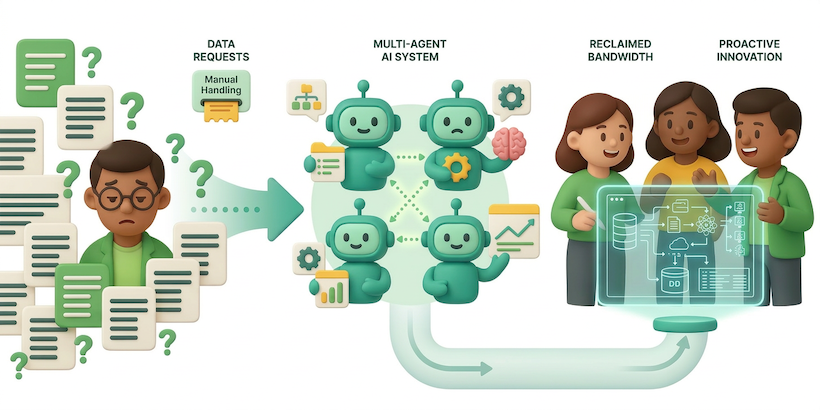
AI agents restored core productivity by shifting from firefighting
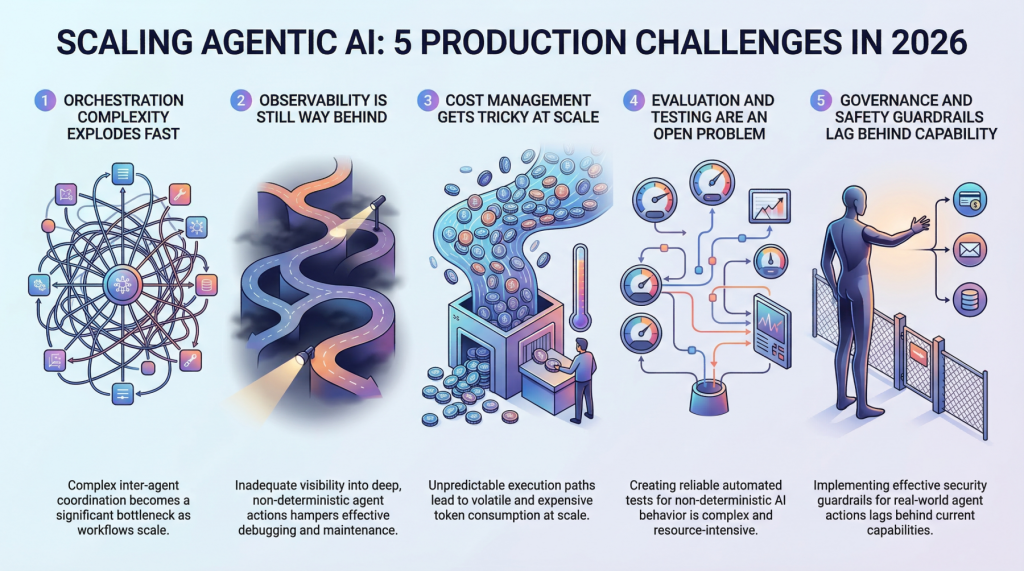
Five production scaling challenges for agentic AI ahead
Building small secure Docker images for Rust applications
🗞️ Tech and AI Trends
What's the right path for AI development?
Astral joins OpenAI, shaping Python's AI future
Comprehension debt: the hidden cost of AI code
👨🏻💻 Coding Tip
React Server Components with Suspense boundaries enable parallel data fetching and faster perceived performance
Time-to-digest: 5 minutes
Most AI-generated tests break the moment the UI changes 🎭
Join Orchestrating AI-Native Testing with Playwright on April 29 and learn how to build a structured architecture that makes AI a reliable part of your testing workflow, not a liability.
Led by Ivan Davidov (QA Automation Lead) and Debbie O'Brien (Playwright Ambassador), this hands-on workshop is everything your testing workflow needs.
🔥 Exclusive 40% off for you guys: ALEX40

Facebook built Friend Bubbles to surface Reels that your friends have liked or reacted to, turning passive scrolling into active social discovery. These bubbles let you tap straight into a conversation with friends who care about the same content, blending recommendation systems with relationship strength to create meaningful engagement at scale.
The challenge: Build a system that accurately identifies which friend relationships matter most, ranks relevant content from those connections, and delivers it all without tanking Reels' notoriously tight performance budget.
Implementation highlights:
Dual closeness models: Combine survey-based relationship signals (mutual friends, interaction patterns, user attributes) with in-platform activity models to identify which friends' tastes actually influence your viewing choices
Expanded retrieval funnel: Explicitly pull friend-interacted videos into the candidate pool so high-quality social content doesn't get filtered out before ranking even starts
MTML ranking with social context: Add friend-bubble signals and viewer-friend closeness features to multi-task learning models so they learn why friend content is valuable differently than general recommendations
Continuous feedback loop: Route bubble interaction data back into training so the ranker keeps improving its understanding of which friend-content pairs resonate
Zero-cost metadata delivery: Pin friend-bubble metadata retrieval to Reels' existing prefetch window and disable animations during scroll, keeping performance pristine on low-end devices
Results and learnings:
Higher engagement quality: Users watching bubble-annotated videos spend more time actively consuming content and less time in brief check-ins, with growth concentrated in longer sessions
Sustained interest patterns: Repeated exposure to friend-curated content builds delayed effects on long-term engagement, suggesting the social signal compounds over time
Expressive reactions drive better outcomes: Love and laughter reactions trigger stronger downstream engagement (especially comments and shares) than simple likes, proving relationship intensity matters
Meta's approach shows that you don't need to choose between scale and personalization. By treating social signals as first-class citizens in the ranking formula instead of afterthoughts, they created a system that helps friends discover each other's interests while keeping the core product snappy.


ARTICLE (typescript wins the popularity contest)
State of JavaScript 2025: Survey Reveals a Maturing Ecosystem with TypeScript Cementing Dominance
ARTICLE (fashion meets the robots)
Exploring AI in Fashion: A Review of Aesthetics, Personalization, Virtual Try-On, and Forecasting
GITHUB REPO (agents go deep)
DeepAgents
ARTICLE (docker but make it tiny)
Building small and secure Docker images for Rust: scratch vs alpine vs debian
ESSENTIAL (keep it simple stupid)
Rob Pike's Rules of Programming
ARTICLE (regex got drip)
Embedded regex flags
ARTICLE (zip goes brrr)
An ode to bzip
ARTICLE (small web supremacy)
The "small web" is bigger than you might think
ARTICLE (moment.js has entered the chat)
Moving From Moment.js To The JS Temporal API
Want to reach 200,000+ engineers?
Let’s work together! Whether it’s your product, service, or event, we’d love to help you connect with this awesome community.

Brief: MIT conference speakers argue that massive-scale AI models are unnecessary and harmful, advocating instead for smaller, task-specific AI tools designed around real community needs—like AlphaFold for protein folding—that deliver benefits without excessive energy consumption, water use, and labor exploitation.
📚 Blocking the Internet Archive Won't Stop AI, But It Will Erase the Web's Historical Record (4 min)
Brief: Major publishers like The New York Times and The Guardian are blocking the Internet Archive from preserving their websites over AI scraping concerns, but this risks erasing decades of historical records that journalists and researchers depend on—since archiving is legally protected fair use, punishing nonprofits won't stop AI training and will only destroy the public's ability to verify how stories were originally published.
Brief: Astral, the company behind popular Python tools Ruff, uv, and ty used by millions monthly, is joining OpenAI's Codex team to push the frontier of AI-driven software development while keeping all open source tools free and community-driven.
Brief: As AI coding tools accelerate development, teams face comprehension debt—the growing gap between code volume and human understanding—which breeds false confidence through clean metrics while teams lose the ability to make changes without breaking unexpected things, a problem no test suite or spec can fully solve.

This week’s tip:
Leverage React Server Components (RSC) with Suspense boundaries and incremental streaming to split rendering between server and client, serving partial HTML while expensive data fetches complete asynchronously. Combine with use() hook to defer client-side data dependencies.

Wen?
SEO-critical content pages: Render static and near-static content on the server, stream to client immediately while async data loads, improving Core Web Vitals.
Personalized dashboards with many async dependencies: Server Components eliminate waterfalls; Suspense boundaries parallelize data fetching and gradual render.
Micro-frontend integration: Server Components can fetch federated data server-side, reducing client-side coordination and network round trips.
Anything worth doing is worth doing slowly.
Mae West


That’s it for today! ☀️
Enjoyed this issue? Send it to your friends here to sign up, or share it on Twitter!
If you want to submit a section to the newsletter or tell us what you think about today’s issue, reply to this email or DM me on Twitter! 🐦
Thanks for spending part of your Monday morning with Hungry Minds.
See you in a week — Alex.
Icons by Icons8.
*I may earn a commission if you get a subscription through the links marked with “aff.” (at no extra cost to you).