

Happy Monday! ☀️
Welcome to the 636 new hungry minds who have joined us since last Monday!
If you aren't subscribed yet, join smart, curious, and hungry folks by subscribing here.

📚 Software Engineering Articles
Saving money as an engineer shouldn’t be this hard
Interview processes compared across 8 major tech companies
Engineer spends $10,000 learning communication; shares key insights
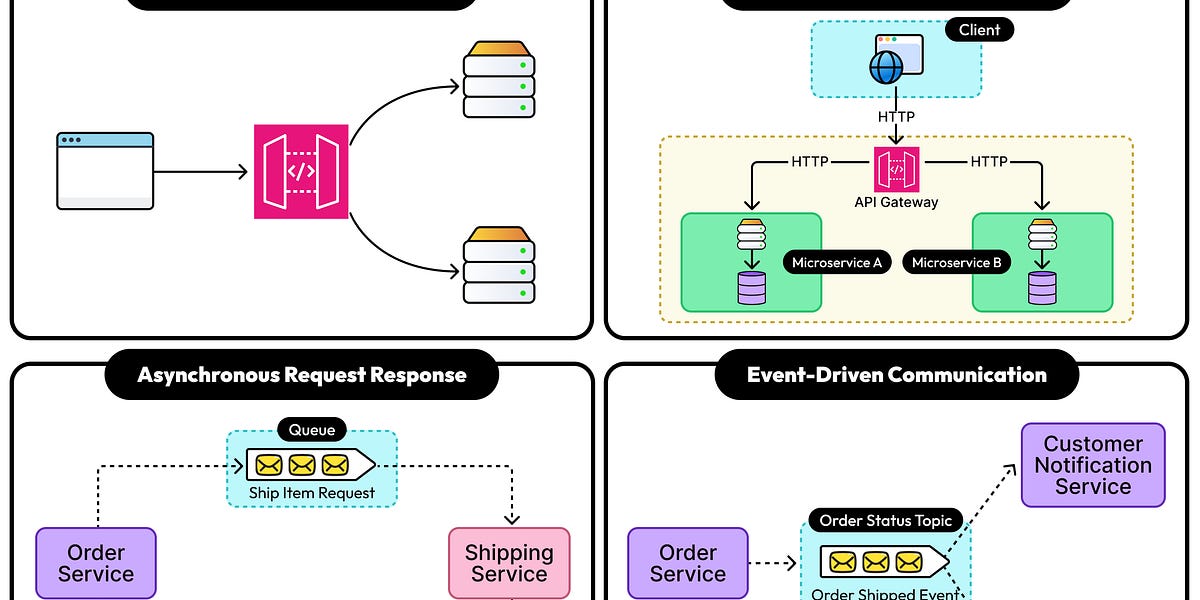
How RPC actually works under the hood
Company saves $500k yearly with custom S3 solution
Build your own database from scratch tutorial
🗞️ Tech and AI Trends
Microsoft and OpenAI announce stronger partnership
Amazon cuts thousands while investing heavily in AI
Massive Azure outage affects Microsoft services globally
👨🏻💻 Coding Tip
How are Cloudflare durable objects useful?
Time-to-digest: 5 minutes
Big thanks to our partners for keeping this newsletter free.
If you have a second, clicking the ad below helps us a ton—and who knows, you might find something you love. 💚

With Cash App, it can.
Round up your spare change from your coffee runs, save part of every paycheck with direct deposit, and make your savings work for you with up to 4% interest.* Plus, there are no monthly or hidden fees.
Save and transfer money whenever you want, and know your money is safe with 24/7 fraud monitoring and proactive security features.
Reach your goals faster with a better way to save that fits into your everyday life.
Cash App is a financial platform, not a bank. Banking services provided by Cash App’s bank partner(s). Prepaid debit cards issued by Sutton Bank, Member FDIC. See Terms & Conditions. To view the eligibility requirements for sponsoring a teen, please visit the Sponsored Accounts section of the Cash App Terms of Service.

Creating realistic test data for GraphQL applications has always been a pain point for developers. Airbnb solved this by combining GraphQL infrastructure, LLMs, and product context to automatically generate high-quality mock data through a simple @generateMock directive.
The challenge: Building a system that generates realistic, maintainable mock data while keeping strong type safety and schema compliance at scale.
Implementation highlights:
Smart directives:
@generateMockand@respondWithMockfor automatic mock generation and runtime substitutionContext-aware generation: Uses schema, design mockups, and product hints to inform the LLM
Validation pipeline: Ensures generated mocks are schema-compliant through GraphQL validation
Version tracking: Embeds hashes to detect when mocks need updates as schemas evolve
Local development focus: Seamlessly integrates into existing developer workflows
Results and learnings:
Massive adoption: 700+ mocks generated across iOS, Android, and Web platforms
Developer productivity: Eliminated manual mock creation and maintenance overhead
Higher quality: Generated mocks closely match production data and design specs
This approach shows how LLMs can be practically integrated into development workflows to solve real engineering problems. By focusing on developer experience and maintaining strong type safety, Airbnb created a solution that makes mock data feel like magic.


Why I Spent $10,000 Learning How to Talk
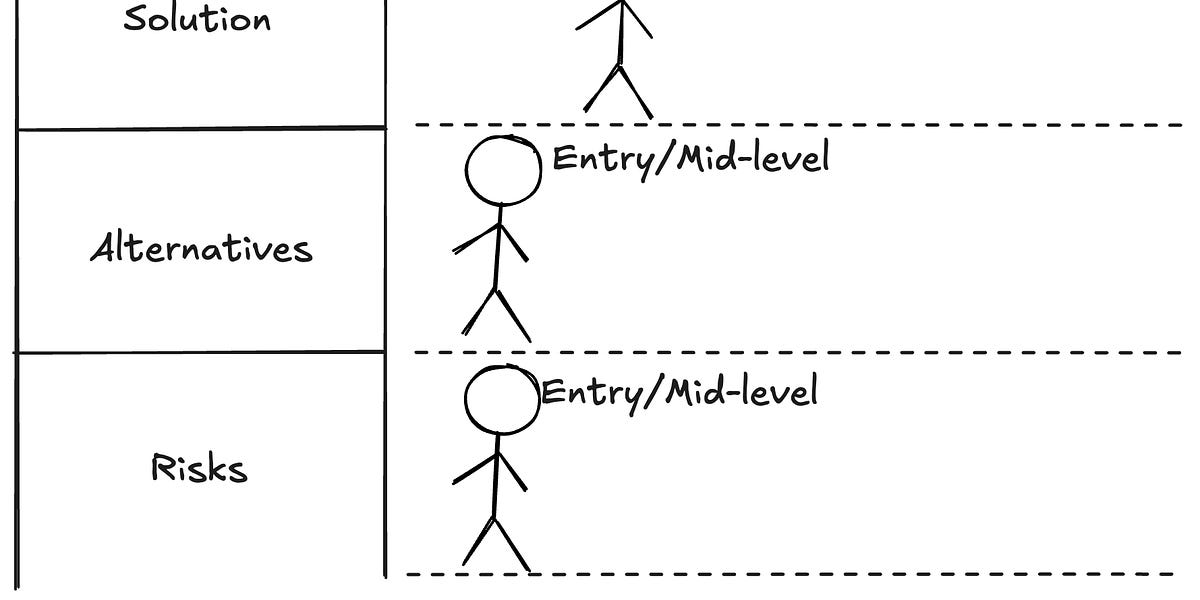
My 3 Biggest Lessons from $10,000 in Communication Coaching.

ARTICLE (boss who codes)
Why I code as a CTO
ESSENTIAL (css wizardry)
Solved By Modern CSS: Section Layout
ESSENTIAL (humble pie)
Saying "I don't know" Is a Sign of Seniority For Me
ARTICLE (robot army)
New trend: programming by kicking off parallel AI agents
ARTICLE (stampede control)
From Thundering Herds to Smooth Streams: How Patreon Scaled For Live Events
ARTICLE (speak up or regret)
Don't Let Your Best Ideas Die in Silence
ESSENTIAL (chaos is good)
Humans Need Entropy
ARTICLE (focus pocus)
The Push-Pull Framework: A Modern Software Engineer Productivity System
ESSENTIAL (database for dummies)
Build your own database
ARTICLE (AI writer buddy)
Writer API
ARTICLE (react performance rescue)
Using Atomic State to Improve React Performance in Deeply Nested Component Trees
Want to reach 200,000+ engineers?
Let’s work together! Whether it’s your product, service, or event, we’d love to help you connect with this awesome community.

Brief: Microsoft acquires 27% stake in OpenAI valued at $135 billion, extending IP rights through 2032 while OpenAI commits to $250B in Azure services, with both companies gaining more flexibility to pursue AGI development independently.
Brief: Amazon announces 14,000 corporate layoffs (4% of workforce) to reduce bureaucracy while investing heavily in AI development, as the company faces pressure to catch up with competitors like Microsoft in the AI race.
Brief: Microsoft experiences widespread outage affecting Azure cloud services, Xbox networks, and Microsoft 365, impacting millions of users and businesses globally.
Brief: Google announces plans to require mandatory developer registration in 2026, including fees and ID verification, sparking concerns about Android's open nature and potential impact on alternative app stores like F-Droid.
Brief: Nanit built N3, a Rust-based in-memory storage system to replace S3 as their video processing landing zone, cutting costs by eliminating per-object fees while using S3 as fallback, leading to $500K annual savings.

This week’s coding challenge:
This week’s tip:
Cloudflare Workers Durable Objects provide stateful edge computing with automatic location affinity and consistent global state. Unlike traditional serverless, they maintain persistent memory and can coordinate across requests with strong consistency guarantees.

Wen?
Global counters/rate limiters: Implement distributed rate limiting that works consistently across all edge locations without eventual consistency issues
Real-time collaboration features: Build collaborative editors or chat systems where state coordination happens at the edge closest to users
Session-based workflows: Maintain stateful user sessions for multi-step processes like checkout flows or form wizards with sub-second global consistency
"Every great developer you know got there by solving problems they were unqualified to solve until they did it."
Patrick McKenzie


That’s it for today! ☀️
Enjoyed this issue? Send it to your friends here to sign up, or share it on Twitter!
If you want to submit a section to the newsletter or tell us what you think about today’s issue, reply to this email or DM me on Twitter! 🐦
Thanks for spending part of your Monday morning with Hungry Minds.
See you in a week — Alex.
Icons by Icons8.
*I may earn a commission if you get a subscription through the links marked with “aff.” (at no extra cost to you).