

Happy Monday! ☀️
Welcome to the 38 new hungry minds who have joined us since last Monday!
If you aren't subscribed yet, join smart, curious, and hungry folks by subscribing here.

📚 Software Engineering Articles
Tech and AI Trends
Weekly Coding Tip
Keep partial results with
Promise.allSettled
Time-to-digest: 5 minutes

The challenge: Two decades ago, Amazon’s Alf lock service needed to maintain a consistent view of the world while thousands of clients acquired and renewed locks through failures and network partitions. Large-scale and chaos tests were useful, but expensive and unable to reproduce every troublesome event ordering on demand. The team simulated Alf’s servers and network in one controlled program, injected faults and explored concurrency scenarios. It also used formal reasoning with TLA+. Simulation found bugs before deployment; testing on real servers found a different set of problems.
Implementation highlights: AWS now has more than 200 services, so hand-building a faithful local environment for each one would be a different scale of work. AWS Emulator uses public service API models as a starting point. Agents build fidelity tests around customer scenarios, check those tests against real AWS, and then develop the emulator to pass the same tests. For example, an SQS test can check whether a received message stays hidden until its visibility timeout expires. Failed comparisons reveal gaps in the local implementation.
Results and learnings: AWS says agents wrote and tested the emulator’s code, which uses more than 400 API models covering over 200 services and runs locally and offline. The company also describes a merge gate with automated checks, including security review agents. It does not follow that a simulation captures every production failure: Alf’s history is a reminder to test the model against reality and keep testing the real system too.
Closing insight: An agent’s feedback loop is only as useful as the behavior it can observe. Engineers still need to define meaningful scenarios, check fidelity against the real service, and decide which tests and merge gates make a change trustworthy.




ESSENTIAL (Inventory reservations without Redis)
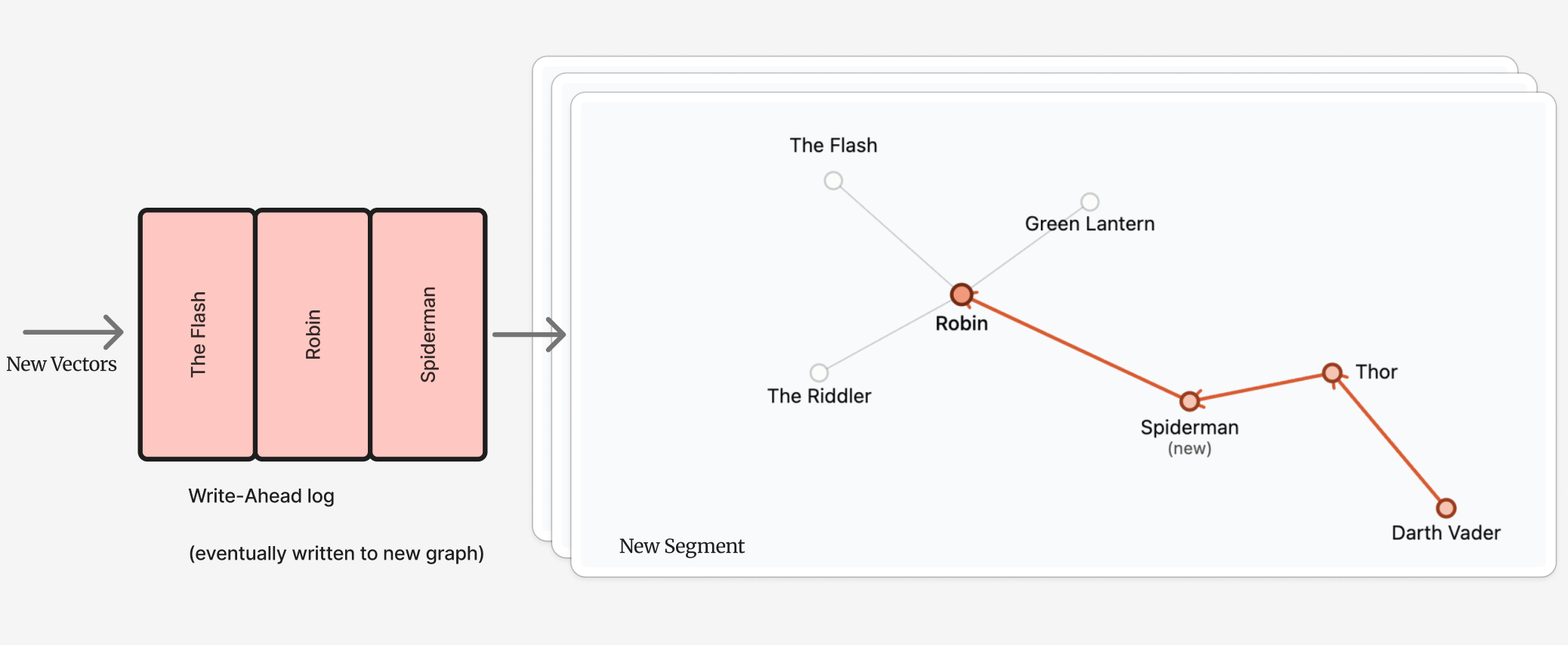
ARTICLE (A six-million-version search problem)
ARTICLE (What junior engineers need)
ARTICLE (Web expertise for coding agents)
ARTICLE (When less JavaScript adds complexity)
ARTICLE (Make decisions more objectively)
ESSENTIAL (The migration lock queue)
ARTICLE (Make generated PRs easier to scan)
Want to reach 200,000+ engineers?
Let’s work together! Whether it’s your product, service, or event, we’d love to help you connect with this awesome community.

🔌 Announcing the GraphQL over HTTP Specification · ~4 min read
Brief: The first GraphQL over HTTP specification defines transport behavior and a response media type while the core GraphQL spec remains transport agnostic.
💎 Gemini 4 Carbon is now available · ~12 min read
Brief: Google says its Gemini 4 Carbon model is available to developers and other users, with a focus on complex coding and long-running agentic work.
🧠 Anthropic ships Claude Fable 5.2, 30% faster and cheaper than before · ~33 min read
Brief: Anthropic says Fable 5.2 and Mythos 5.2 improve coding and reasoning, with faster generation and lower listed prices than their predecessors.
Brief: Anthropic introduces Claude Sheets, Whiteboards, and Data, alongside interactive connectors that embed partner applications in Claude.
Brief: xAI says Grok Bot 1.0 can join team conversations in Slack and Teams, suggest work, and hand decisions to people.
Brief: OpenCode Browse combines a browser extension and MCP server so agents can work in existing browser tabs, with handoffs for login and other human steps.

This week’s tip:
Keep partial results with Promise.allSettled
When independent requests run together, Promise.allSettled lets you inspect each result even when another rejects. Pair each result with its original URL and handle failures explicitly. A fulfilled fetch can still contain an HTTP error, so check the response status too.

When? Use this for independent dashboard panels, batch lookups, or diagnostics where partial results are useful.
Being wrong opens us up to the possibility of change.
Mark Manson


That’s it for today! ☀️
Enjoyed this issue? Send it to your friends here to sign up, or share it on Twitter!
If you want to submit a section to the newsletter or tell us what you think about today’s issue, reply to this email or DM me on Twitter! 🐦
Thanks for spending part of your Monday morning with Hungry Minds.
See you in a week — Alex.
Icons by Icons8.
*I may earn a commission if you get a subscription through the links marked with “aff.” (at no extra cost to you).