

Happy Monday! ☀️
Welcome to the 326 new hungry minds who have joined us since last Monday!
If you aren't subscribed yet, join smart, curious, and hungry folks by subscribing here.

📚 Software Engineering Articles
🗞️ Tech and AI Trends
👨🏻💻 Coding Tip
Use partition pruning and columnar formats like Parquet to reduce query costs by 99%.
Time-to-digest: 5 minutes

As AI agents handle more of our coding work, a dangerous gap is opening: tasks complete faster than expertise builds. Before agents, you learned by debugging failures, reviewing diffs, and living with your mistakes. Now plausible code arrives instantly. Junior engineers especially risk becoming prompt experts without understanding the systems they ship.
The real problem isn't agents themselves—it's that completed tasks no longer guarantee learning. An Anthropic study found engineers using AI scored 50% on a Python library quiz versus 67% for those coding by hand. But the gap closed for engineers who asked conceptual questions and demanded explanations instead of treating models as code vending machines.
The challenge: Maintaining technical judgment and deep expertise when agents can skip the reps that traditionally built both.
Implementation highlights:
Form hypotheses first. Before prompting, develop your own idea about the solution shape. This forces critical thinking and gives you a baseline to compare against the agent's approach.
Ask why constantly. Request explanations, not just code. Push your agent to teach you how things work, not just deliver working output. The 17-point quiz gap in the Anthropic study came from engineers who demanded reasoning.
Inspect the diffs. Read what changed. Predict what might fail. This habit—born from manual debugging—remains your best defense against shipping broken abstractions.
Verify with constraints. Give your agent concrete, testable acceptance criteria. Verification is the floor; without it, you're flying blind. With it, you're directing.
Occasionally work by hand. Spot-check small problems manually. Keep your mental model moving at the same speed as task completion. Agent throughput scales faster than attention; this keeps you tethered to reality.
Results and learnings:
Expertise stays task-specific. An Anthropic study of 400,000 Code sessions showed intermediate expertise in a domain meaningfully improved outcomes. Generic prompting skills alone don't transfer.
Imagination is the ceiling. Verification is the floor. You need domain expertise to catch what agents miss—performance regressions, interaction patterns that break on mobile, assumptions that no longer fit. But you also need imagination to know what to build in the first place.
Skills encode workflows, not judgment. MCPs and automation can codify useful patterns. They cannot tell you when those patterns stop working. That requires human judgment built through thousands of small failures.
The uncomfortable truth: mastery still comes from reps. Agents just made skipping them easier. The difference between shipping beautiful products and shipping beautiful-looking mistakes is now whether you stayed curious enough to learn while the code was being written. Otherwise you're just a really good prompt engineer—which, frankly, compiles about as well as a prayer.

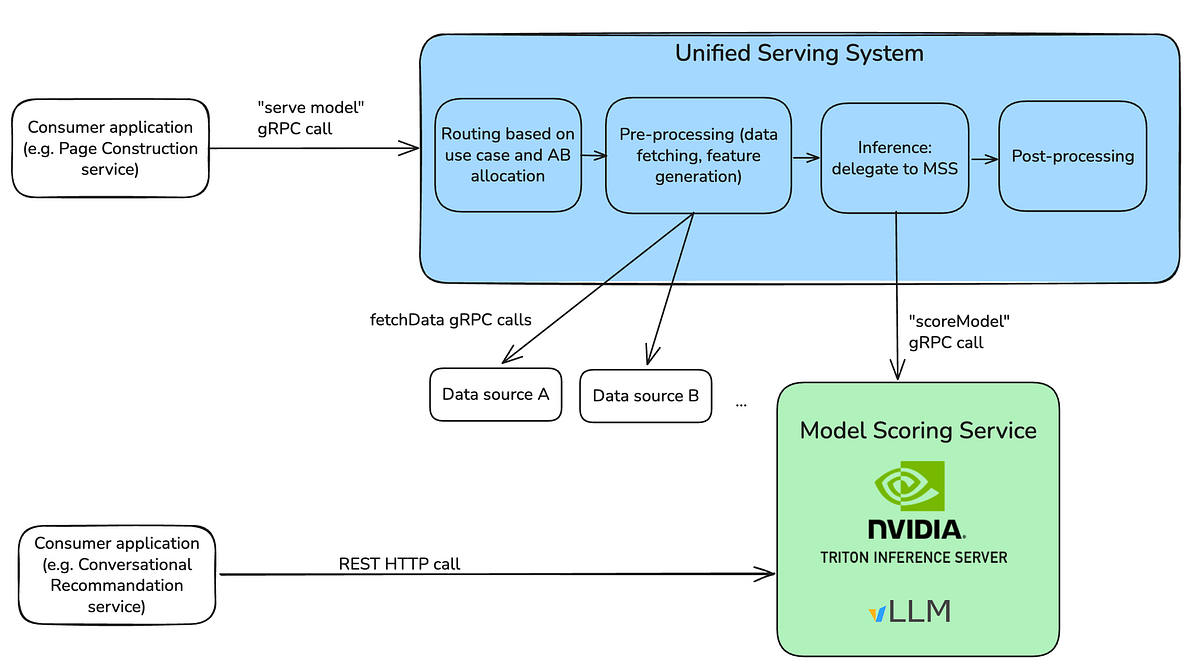

ESSENTIAL (expose less, add later)
Good APIs age slowly
ARTICLE (tests aren't flaky)
That Test isn't Flaky. It's Broken.
ESSENTIAL (names carry meaning)
How to name things
ARTICLE (timestamp speed tricks)
A faster way to convert a timestamp
ARTICLE (llm decision batching)
Two techniques for working with System One models
ARTICLE (let llms copyedit only)
How To Write With An LLM
GITHUB REPO (retro games preserved)
A custom virtual machine for the Stars! 4X game
ARTICLE (agents create debt fast)
AI-Generated Technical Debt: Architecture Garbage Collection for Coding Agents
ARTICLE (sqlite needs analyze)
Learning a few things about running SQLite
Want to reach 200,000+ engineers?
Let’s work together! Whether it’s your product, service, or event, we’d love to help you connect with this awesome community.

Brief: TypeSafe AI released Jev, a System One Model optimized for structured decisions that's 40-200x faster than existing LLMs while eliminating hallucinations.
Brief: OpenAI introduced Astra for Law, combining GPT-6 with a 230 million-URL legal search index to help law firms build AI products and workflows for legal research and analysis.
Brief: Anthropic launched Claude Projects, which coordinate multiple parallel cloud threads that continue running after you close your laptop, consolidating related work streams in one conversation.
Brief: Odyssey-3, a foundation world model, can control diverse physical systems including robots, vehicles, and drones with only hours of task-specific training data.
Brief: A developer reflects on tech feeling less exciting than 15 years ago, citing stagnation, enshitification, and lost innovation while asking the community what still inspires them.
Brief: A commentary on the hypocritical stance of calling for AI development slowdowns while exempting oneself from such restrictions.

This week’s tip:
Efficient ETL with Partition Pruning and Columnar Storage
Optimize data pipelines by leveraging partition elimination and columnar formats (Parquet) to reduce I/O and compute costs dramatically.

Wen?
When processing terabyte-scale event logs where filtering can reduce data by 99%
When optimizing AWS Athena or BigQuery query costs with intelligent partitioning
When building data lakes that need to support fast aggregations across time series
Be kind whenever possible. It is always possible.
Dalai Lama


That’s it for today! ☀️
Enjoyed this issue? Send it to your friends here to sign up, or share it on Twitter!
If you want to submit a section to the newsletter or tell us what you think about today’s issue, reply to this email or DM me on Twitter! 🐦
Thanks for spending part of your Monday morning with Hungry Minds.
See you in a week — Alex.
Icons by Icons8.
*I may earn a commission if you get a subscription through the links marked with “aff.” (at no extra cost to you).